Additional information
| Weight | 4.1 lbs |
|---|---|
| Dimensions | 24 × 12 × 8 in |
| SELECT YOUR SIZE (REQUIRED) | Extra Small 16"-17", Small 17"-18" |



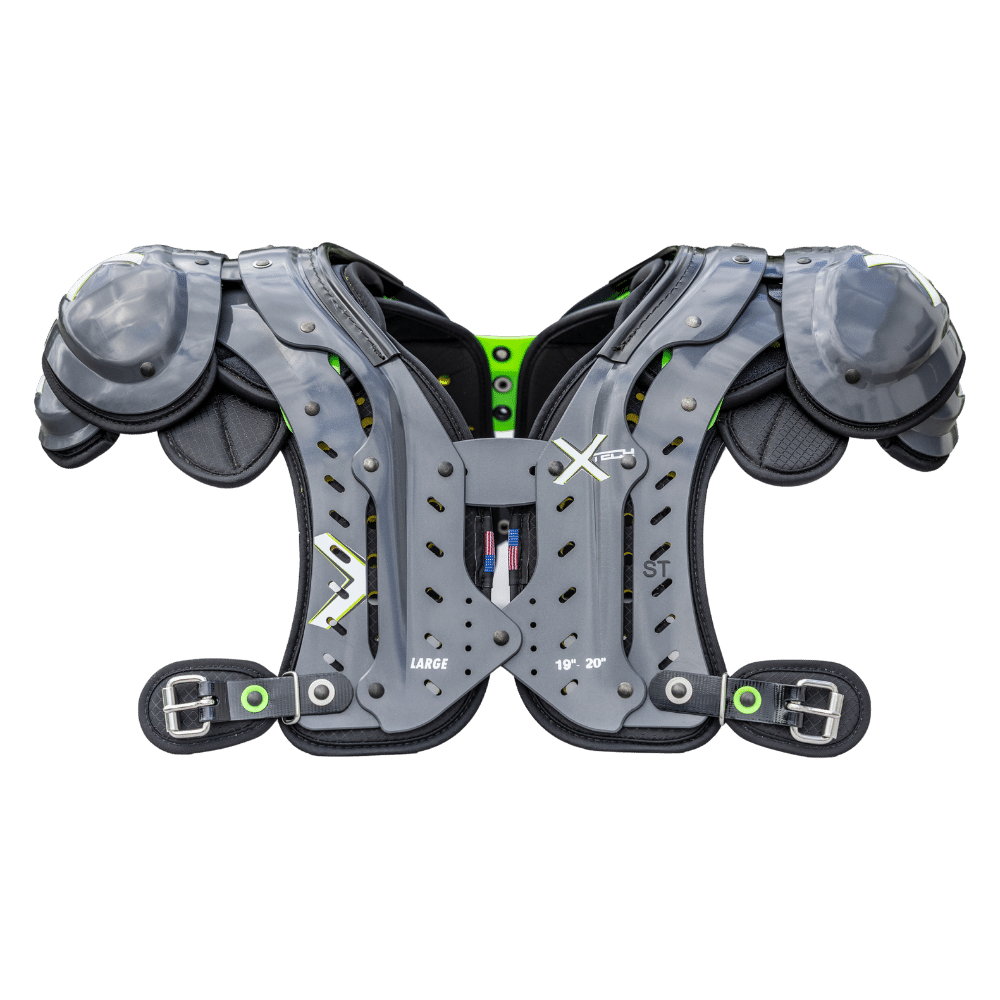
| Weight | 4.1 lbs |
|---|---|
| Dimensions | 24 × 12 × 8 in |
| SELECT YOUR SIZE (REQUIRED) | Extra Small 16"-17", Small 17"-18" |

Not sure what to build?
Every XTECH X2 pad starts with serious football protection, then lets you customize fit, coverage, and mobility around your position and style of play. Use the guide below to understand the main build options, or choose your position above and let the builder recommend a starting setup.
For most players, the right shoulder pad build comes down to three choices: how much coverage you want, how much shoulder mobility you need, and which contact zones are most exposed for your position.
Why XTECH X2
Modern football shoulder pads need to manage contact without forcing the athlete to fight the equipment. XTECH X2 shoulder pads are built for players who need protection, speed, range of motion, and a setup that matches how they actually play.

The X2 system is designed to support impact management while keeping the pad profile efficient, so players can run, throw, block, tackle, and change direction naturally.

The same X2 platform can be configured differently for quarterbacks, receivers, running backs, linemen, linebackers, defensive backs, tight ends, and hybrid players.

XTECH pads are trusted by elite athletes at every level of the game because the build can be shaped around fit, coverage, mobility, and the contact demands of the position.
Builder decisions
The builder options are easier to understand when you think about what each part controls. Start with size, then use the options below to tune the balance between coverage, mobility, and exposed contact areas.

| Builder Option | What It Controls | How to Think About It |
|---|---|---|
| Arch | Overall pad frame and profile. | Choose more traditional coverage or a lower-profile setup with more freedom through the arms and shoulders. |
| Epaulet | Outer shoulder flap. | Helps determine how much shoulder coverage you want versus how streamlined the pad feels. |
| Cup | Shoulder cap protection. | Controls coverage around the shoulder joint, where contact and range of motion both matter. |
| Shoulder Foam | Padding thickness over the shoulder area. | Use this to balance cushioning with reduced bulk, depending on the selected pad and position. |
| Rib Protection | Torso and rib coverage. | Often useful for quarterbacks, running backs, receivers, and players who absorb contact while exposed. |
| Backplate | Lower back protection. | Common for skill players, backs, receivers, defensive backs, and contact-heavy roles. |
| Chest Protection | Sternum and frontal contact coverage. | Useful when direct frontal contact is part of the position or personal preference. |
| Anti-Grabs | Hand-fighting and grab-prone areas. | Helpful for linemen, rushers, and players who battle through hands at the line of scrimmage. |
Position guide
Your position is the fastest way to narrow the build. Use these starting points, then customize the pad in the builder based on body type, comfort, and how much extra coverage you want.

Quarterbacks usually need a low-profile setup that does not fight the throwing motion. Prioritize shoulder mobility, clean arm path, and torso or rib protection for contact after release.
Start with a QB build
Running backs need compact protection that stays out of the way through cuts, contact, and ball security. Consider shoulder mobility plus rib or back coverage for repeated hits.
Build RB shoulder pads
Receivers, corners, and safeties often care most about speed, range of motion, and a lightweight feel while still having enough coverage for tackles, falls, and open-field contact.
Build skill-position pads
Hybrid players need a middle ground: enough mobility to run routes, cover space, or chase plays, with enough contact coverage for blocking, tackling, and collisions inside the box.
Build hybrid pads
Linemen usually need durability, shoulder and chest coverage, and options that support constant hand fighting. Anti-grabs, sternum coverage, and a more protected build can make sense here.
Build line shoulder pads
Edge players live between speed and contact. Start with the mobility profile you need, then consider extra shoulder, sternum, or anti-grab options for hand-fighting situations.
Build edge-player padsWhy custom
Off-the-shelf pads force the player to adapt to the pad. A custom X2 build lets the pad adapt to the player's size, position, contact profile, and preferred balance of coverage and mobility.
Traditional pads can work for basic needs, but the player usually has fewer ways to fine-tune coverage, pad profile, and add-ons around a specific role.
The X2 builder turns the purchase into a guided setup: choose the base fit, tune the pad profile, then add protection where the player is most exposed.
Sizing and fit
Shoulder pad sizing starts with shoulder width, but the right fit also has to feel stable through football movement. Before ordering, confirm the size, check how the pad sits on the player, and get help if the measurement is between sizes.
Protection add-ons
The best build is not always the one with every option selected. Choose add-ons based on position, contact exposure, and comfort in the pad.

Useful for players who take hits while throwing, running routes, carrying the ball, or working through open-field contact.

Helps players add coverage around exposed torso areas without changing the entire shoulder pad build.

Consider this when direct frontal contact is a concern, especially for players who take repeated hits in traffic.

Built for hand-fighting situations where linemen, rushers, and edge players are working through grabs and contact.
FAQs
Yes. The X2 can be configured differently by position and play style, so a quarterback, receiver, running back, linebacker, lineman, tight end, or defensive back can start from a different recommendation and then adjust the build.
Think of the options as a coverage-to-mobility range. Standard is the more traditional coverage profile, Skill is more streamlined, and Super Skill is the lowest-profile option for maximum range of motion where available.
Quarterbacks usually want range of motion through the throwing shoulder, a lower-profile feel, and optional torso or rib protection based on contact exposure.
Linemen should usually think about coverage, durability, shoulder and chest protection, and options such as anti-grabs for hand-fighting at the line of scrimmage.
It depends on position and contact exposure. Skill players, backs, quarterbacks, receivers, and defensive backs often consider rib or back coverage because they can take hits while exposed or extended.
Start with shoulder width, compare it against XTECH's size ranges, and use EQM-FIT if the player is between sizes or if you are unsure about fit.
Yes. The position recommendation is a starting point, not a locked configuration. You can still adjust arch, epaulet, cup, shoulder foam, and add-on protection options where available.
Start with your position, confirm the right size, then customize the X2 around the coverage, mobility, and protection zones that fit your game.