

Running Back Shoulder Pads
Best Shoulder Pads for Running Backs: Built for Cuts, Contact, and Fit
A running back needs shoulder pads that stay close through a jump cut, stay comfortable when the game gets physical, and give you room to run with the ball tucked tight. Start with fit and mobility—then add coverage where your style of play calls for it.

The short answer
Running back pads should protect without making you think about your pads.
When a pad is fitted correctly, it should stay centered while you accelerate, take a handoff, drop your shoulder, and get back up for the next snap. You should notice the game—not your equipment riding up, pinching, or getting in the way.
RB buying guide
Use this three-part check before you choose a running back shoulder pad.
The best setup is not automatically the lightest or the most built-up one. It is the one that matches the player, the contact they see, and the way they move.
Start with the way you run.
Open-field backs and players who catch a lot of balls often prioritize a streamlined feel and arm freedom. More downhill runners may want to consider a little more coverage in the areas that take repeated contact.
Make the pad pass a movement check.
With the pad on, bring the ball tight to both sides, reach overhead, and rotate through the shoulders. The setup should feel secure and should not crowd the neck or slide out of place.
Add coverage on purpose.
Rib, chest, or back coverage can make sense for a player’s preferences and role. Add it because it serves a real need—not because a bigger-looking pad is automatically a better fit.
What type of shoulder pads are best for running backs?
Most running backs look for a low-profile, secure-fitting shoulder pad that keeps the arms and shoulders free for ball security, cuts, and contact. The right amount of extra coverage depends on the player’s frame, role, comfort, and how much direct contact they expect—not on one universal “RB pad” recipe.
secure fit + free movement + the coverage you actually want.

A smart XTECH starting point
For many RBs, begin with a Skill arch—then make the build yours.
“Skill” is a useful starting point for a running back, not a substitute for a fit conversation. In the XTECH X2 builder, your shoulder-width size, arch, epaulet, cup, foam, and optional coverage work together to create the final feel.
- Confirm size by shoulder width. The X2 builder lists sizes by shoulder-width range, so measure before you configure.
- Choose the profile before the extras. Get the main pad and shoulder coverage right first; that is what drives the fit and movement.
- Use coverage options for a reason. Consider rib, chest, or back coverage based on your role, comfort, and preferred setup.
- Ask when you are between builds. XTECH EQM-FIT is the right next step if the player is between sizes or needs help thinking through options.
Player proof
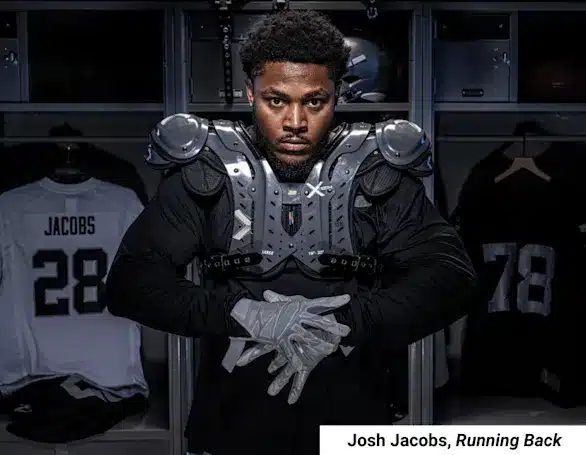
Custom XTECH pads, built for a back who plays fast and physical.
Watch Josh Jacobs in XTECH. Then use the builder to start with your shoulder-width size and a setup that matches how you carry the ball, make your cuts, and take contact.
Choose coverage without overbuilding
Think through the contact you take—not just the position on the roster.
These are practical places to start a conversation with the player or XTECH’s fit team. They are not guarantees or requirements for every running back.
Rib coverage
Worth discussing for backs who want more torso coverage or who take frequent contact when finishing runs and working inside.
See builder optionsBackplate coverage
A backplate is a common add-on for players who prefer more lower-back coverage. Check placement and comfort with the full pad on.
Explore the 5-sided backplateChest and shoulder options
Some players want a more built-up feel in high-contact areas; others want the cleanest possible profile. Start with movement, then choose the coverage that supports it.
Configure the X2“I have been playing my entire career in custom XTECH football pads.”Josh Jacobs — running back
Running back pad comparison
Lightweight vs. more coverage: what should an RB choose?
Use this as a decision tool, not a promise. The right answer depends on fit, comfort, role, and what the player actually feels during football movement.
| If this sounds like you… | Start by prioritizing… | Then consider… |
|---|---|---|
| “I make people miss in space and catch passes.” | A secure, streamlined fit with clear arm and shoulder movement. | Skill profile, then only the coverage options that feel right when you run, catch, and protect the ball. |
| “I run between the tackles and finish runs.” | A pad that stays planted through repeated contact and still lets you keep a strong ball-carrying position. | Whether rib, chest, or back coverage makes sense for your comfort and role. |
| “I play RB plus another position.” | The movement your full workload demands—not a build based on one snap type. | Using XTECH EQM-FIT to talk through your positions, frame, and the feel you want. |
Running back shoulder pad FAQs
Good questions to ask before you buy.
What are the best shoulder pads for a running back?
Should a running back wear lightweight or heavier shoulder pads?
Are XTECH Skill shoulder pads good for running backs?
How should football shoulder pads fit a running back?
Do running backs need a backplate or rib guard?
Ready when you are
Build a running back setup that feels like part of your game.
Choose your X2 starting point, check your shoulder-width size, and make the coverage choices that match the player—not a generic position chart. If you want another set of eyes before you build, XTECH EQM-FIT is there to help.


